


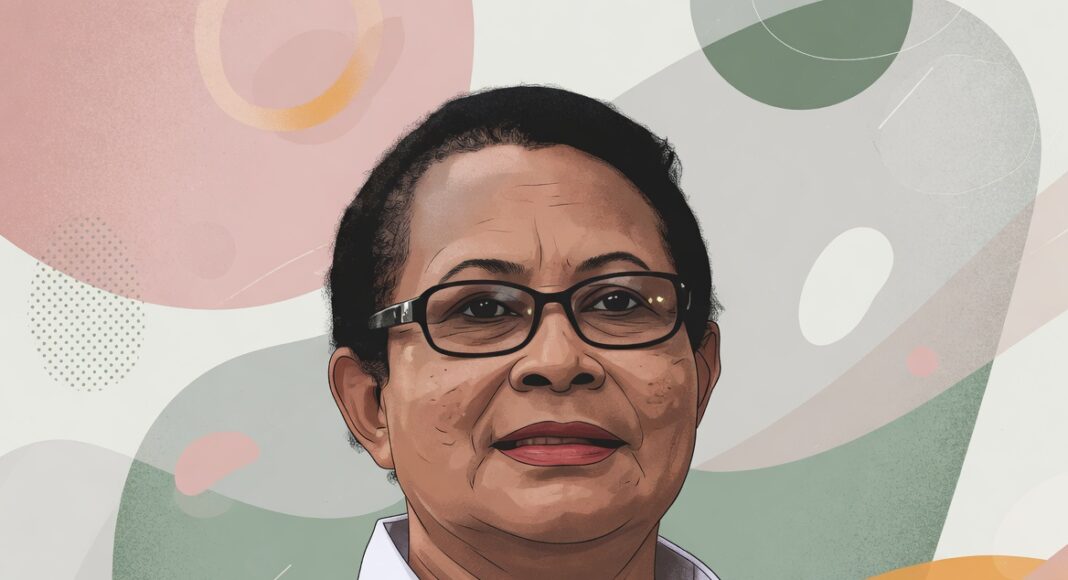
When Yohana Susana Yembise became Indonesia’s Minister for Women’s Empowerment and Child Protection in 2014, she did more than break glass ceilings, she brought Papuan girls into national focus. As the first female minister from Papua, Yembise transformed her personal journey into national leadership, championing children’s rights in provinces long neglected by Jakarta-centred policies. Her legacy stands at the intersection of identity and advocacy, an Indigenous woman turning lived experience into systemic change.
From Professor in Papua to National Advocate
Yembise’s roots are in Manokwari, Papua, where she grew up observing girls dropping out of school and marrying young. She earned her PhD from the University of Newcastle and became Papua’s first female professor (Liputan6, 2014). In her academic career, she explored how poverty, geography, and patriarchy intersect to imperil girls’ futures in Eastern Indonesia, research that later informed her national policy agenda.
Once appointed as minister, she launched Indonesia’s “Three Ends” programme, ending violence against women and children, human trafficking, and economic inequality (Antara News, 2019). Unlike top-down policies often divorced from regional realities, Yembise grounded her approach in grassroots knowledge, often drawing inspiration from her native Papua to shape inclusive and context-sensitive interventions.
Campaigning Against Child Marriage
Yembise tackled one of Indonesia’s most persistent challenges, child marriage. At the time, 22.8% of women aged 20-24 had married before turning 18, with rural provinces bearing the highest rates (The Jakarta Post, 2018). She emphasised that child marriage was often justified through cultural and religious norms, yet was ultimately a social, not sacred, construct (The Jakarta Post, 2018).
She lobbied Parliament to revise the outdated 1974 Marriage Law, urging for the legal age of marriage to reflect biological and emotional readiness rather than tradition. Yembise proposed 20 for women and 22 for men (CNN Indonesia, 2018). Her persistent advocacy contributed to the 2019 legal reform that equalised the marriage age at 19 for both genders, a critical milestone in Indonesia’s gender justice landscape.
Championing Child-Friendly Villages in Papua
Recognising that national solutions must have local roots, Yembise spearheaded the “Kampung Layak Anak” (Child-Friendly Villages) initiative in remote areas such as Sarawandori and Biak Numfor (Antara News Papua, 2017). These villages were evaluated across 31 child rights indicators, including access to clean water, healthcare, education, and safety.
Yembise ensured that implementation was adapted to cultural and geographical realities. In Biak Numfor, schools and clinics were retrofitted, local women trained in child protection, and community leaders empowered to monitor progress. These efforts exemplified how national policies can succeed when shaped and driven by local champions, a hallmark of Yembise’s inclusive governance.
An Indigenous Voice in Policy
Yembise’s influence extends far beyond symbolic representation. By centring Indigenous girls in policy discourse, she challenged Indonesia’s entrenched hierarchies of power and inclusion. Her work in education and marriage law reform saved countless girls from early school dropout, premature motherhood, and gendered vulnerability.
Her leadership also aligns closely with the Women, Peace and Security (WPS) agenda. Though Indonesia is not a country at war, systemic issues like child marriage, maternal mortality, and gender inequality are threats to peace and human security. Yembise embodied WPS pillars, protection, participation, and prevention, by translating global frameworks into practical, rights-based action for girls in Eastern Indonesia.
Broader Implications for Policy and Development
Yembise’s approach underscores the importance of intersectional, locally informed policy-making in addressing gender disparities. Her integration of Indigenous perspectives into national legislation demonstrates how marginalised voices can reshape systems from within. For countries with diverse populations, her work highlights the need to tailor national programmes to regional contexts, ensuring that development is equitable and inclusive.
Her leadership serves as a compelling case study for how ministries dedicated to women and children’s affairs can wield structural influence, moving beyond symbolic gestures to effect lasting legal and social reform. Yembise’s legacy offers policymakers a replicable model grounded in evidence, empathy, and equity.
A Legacy of Change, Still in Motion
Yohana Susana Yembise’s ministerial tenure left behind measurable reforms, crafted not from a distance, but from within the communities she served. She turned a national platform into a tool for justice, asking Indonesia to confront the links between tradition and inequality, between policy and lived reality.
For activists, scholars, and policymakers working in child protection or within the WPS framework, her legacy is a powerful blueprint, begin with the marginalised, collaborate with communities, and legislate with insight. Whilst others may learn from her model, it is Indonesia, with its unique Indigenous diversity, that best understands the depth and rarity of her contribution.
References
Antara News. (2019). Sang perempuan dari Timur pendobrak sejarah. Antara News. https://www.antaranews.com
Antara News Papua. (2016). Menteri PPPA canangkan Kampung Sarawandori di Kabupaten Yapen Kepulauan sebagai Kampung Ramah Anak. Antara Papua. https://papua.antaranews.com/berita/457414/menteri-pppa-canangkan-kampung-ramah-anak-di-sarawandori
CNN Indonesia. (2018). Yohana Usulkan Batas Usia Perkawinan bagi Perempuan 20 Tahun. https://www.cnnindonesia.com/nasional/20181219135216-20-354873/yohana-usulkan-batas-usia-perkawinan-bagi-perempuan-20-tahun
Liputan6.com. (2014). Yohana Yembise, dari Papua Jadi Menteri Pemberdayaan Perempuan dan Perlindungan Anak. Liputan6. https://www.liputan6.com/news/read/2124702/yohana-yembise-dari-papua-jadi-menteri-pemberdayaan-perempuan
The Jakarta Post. (2018). Minister urges House to end child marriage. The Jakarta Post. https://www.thejakartapost.com/news/2018/04/16/minister-urges-house-to-end-child-marriage.html
The Jakarta Post. (2018) ‘Cultural, religious norms’ used as ground for early marriage: Minister. The Jakarta Post. https://www.thejakartapost.com/news/2018/07/24/cultural-religious-norms-used-as-ground-for-early-marriage-minister.html