

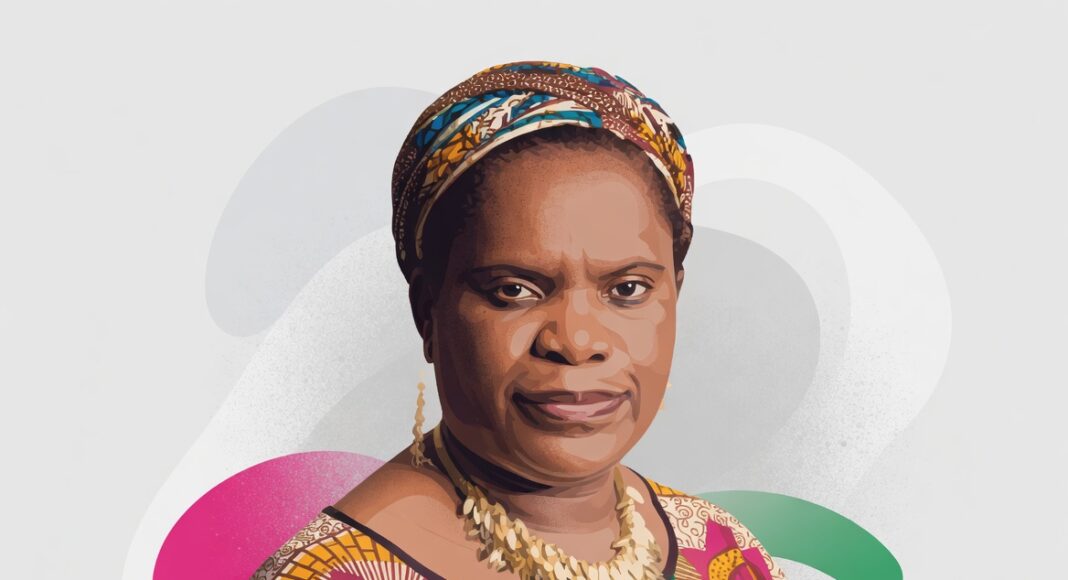
When Betty Makoni stood up to speak, it wasn’t just her voice that echoed, it was the silenced cries of thousands of girls who had long been forgotten. In a society where child sexual abuse was cloaked in cultural myths and silence, Makoni didn’t just break the taboo, she shattered it. A survivor, educator, and radical visionary, Makoni built one of Africa’s most effective grassroots movements for girls: the Girl Child Network (GCN). Her legacy? Not just in how many she saved, but in how many she turned into fighters, girls who would no longer be victims, but defenders of their own futures.
Not Just Another Victim but The Making of a Warrior
Makoni’s story begins with a trauma that could have destroyed her. As a young girl in Zimbabwe, she was raped by a man following a cultural belief that sleeping with a virgin could cure HIV/AIDS (Makoni, 2012). This horrific abuse, compounded by the early death of her mother and years of poverty, could have written her out of the story altogether. But instead, it lit the fire that fuelled her mission, to ensure that no girl would ever be voiceless again.
Trained as a teacher, Makoni saw first-hand how sexual violence, forced marriage, and educational neglect affected the girls in her classrooms. She recognised that these were not isolated incidents, but part of a structural war on girlhood. The Girl Child Network began as a simple school club, but grew into a nationwide movement that has supported over 35,000 girls in crisis (World’s Children’s Prize, 2009).
The Girl Child Network: Leadership, Not Just Rescue
The unique selling point of Makoni’s approach wasn’t only that she provided shelter or legal support. It was her insistence that survivors become leaders. GCN’s philosophy rejected the passive narrative of “victimhood”. Instead, girls were trained as peer educators, public speakers, and grassroots advocates. The model was girl-led, culturally embedded, and fiercely local, designed not just to treat trauma, but to dismantle the systems that caused it.
This shift, from rescue to empowerment, became a radical act in Zimbabwe, where questioning male authority or cultural norms was often seen as dangerous. Makoni’s work confronted not just individuals, but a patriarchal structure protected by silence.
Breaking Taboos, Facing Backlash
Makoni’s boldness brought both global acclaim and local danger. She became a CNN Hero (2009), was honoured by Amnesty International, and addressed the United Nations. Yet at home, her outspoken stance drew the ire of powerful figures. Religious and political leaders accused her of undermining tradition. Facing threats and smear campaigns, she was forced into exile in the UK (Baldwin, 2010).
But exile didn’t mute her, it amplified her. She launched Girl Child Network Worldwide, connecting survivor-led initiatives across continents. Her memoir Never Again (2009) offers a raw, unflinching look at the emotional labour of leading a justice movement born from pain.
Betty Makoni Through a WPS Lens
Makoni’s work sits squarely within the Women, Peace and Security (WPS) agenda, though not in the conventional sense. Zimbabwe wasn’t in formal conflict during her rise, but the endemic sexual violence, child exploitation, and lack of legal protection for girls constitutes a different kind of war. In this light, GCN is not just a social project, it’s a peacebuilding intervention.
The WPS agenda calls for protection, participation, and prevention. Makoni embodies all three. She protected thousands of girls, insisted on their participation in decision-making, and worked tirelessly to prevent abuse by attacking root causes: poverty, patriarchy, and ignorance.
Her work also challenges a key blind spot in the WPS framework: its traditional focus on women in warzones. Makoni’s activism shows that violence against girls in peacetime can be just as urgent, systemic, and destabilising, a powerful call to widen the scope of what counts as “security”.
The Girl Who Roared
Betty Makoni didn’t wait for policy reform. She didn’t beg for international intervention. She started with a club in a classroom, and turned it into a revolution. Her gift to the world is not just her bravery, but her blueprint: how to transform survivors into leaders, silence into power, and trauma into transformation.
In a world still grappling with sexual violence, Makoni’s work is not just relevant, it is urgent. Every child protection programme, WPS policy, and global feminist movement should take note. Justice isn’t just about prosecuting harm, it’s about preparing girls to rewrite the rules.
References
Baldwin, K. (2010). Fighting for girls: New perspectives on gender and violence. SUNY Press.
Makoni, B. (2012). Never Again: Not to Any Woman or Girl Again. Trafford Publishing
World’s Children’s Prize. (2009). Betty Makoni: Girl Child Network. Retrieved from https://worldschildrensprize.org/bettymakoni