

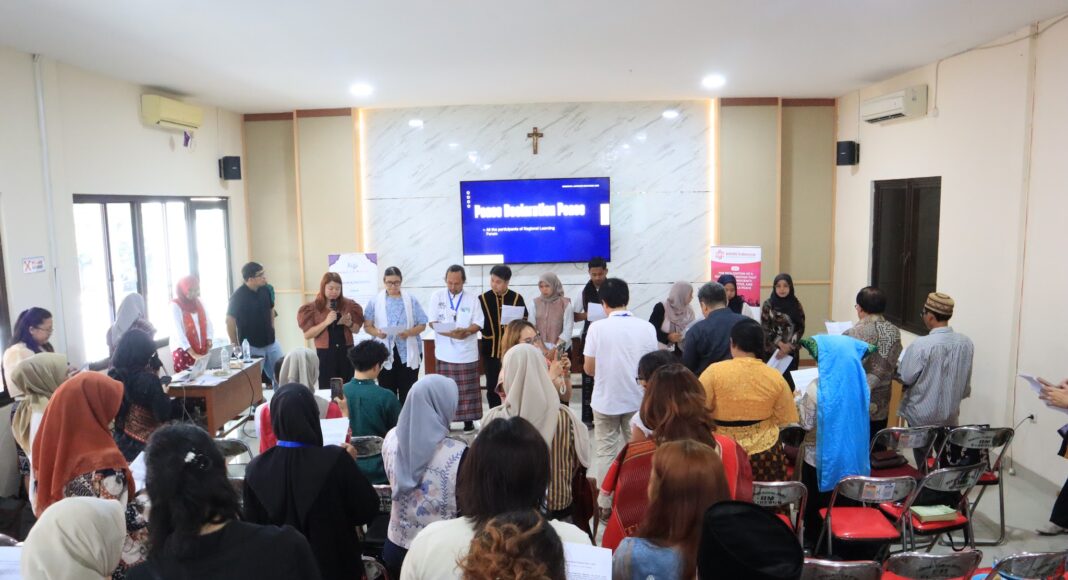
On 6-11 of September 2026, I joined the Regional Exchange Learning Program in Cirebon, commemorating the 25th anniversary of the 9/11 attacks held by ALL Forum, AMAN Indonesia, Fahmina, and KUPI. The program’s theme, “Turning the Tide – Christian and Muslim Youth & Women Building Peace in Asia”, framed my journey as one of dialogue, solidarity, and hope. For six days, I lived in Pesantren KHAS Kempek and Kebon Jambu Al-Islamy, immersing myself in the rhythms of pesantren life and discovering Islam as a faith of peace, openness, and humanity.
This reflection explores three dimensions of my experience: the everyday life of santri in pesantren, the transformative leadership of women such as Nyai, and the ethical frameworks of Mubadalah, Gus Dur’s pluralist legacy, and the KUPI movement. Together, these experiences reveal pesantren as spaces of peacebuilding, democracy, and ecological responsibility—countering Islamophobia and offering a vision of Islam that is inclusive, just, and globally relevant.
Living in the Pesantren, Witnessing the Face of Islam Rahmah
Pesantren are more than schools; they are communities where faith, discipline, and solidarity are lived daily. At Pesantren KHAS Kempek and Kebon Jambu Al-Islamy, the vision and mission emphasise forming generations who are berakhlak mulia (noble in character), independent, and embody Rahmatan lil ‘alamin—Islam as a mercy for all creation. Their mission includes strengthening faith, mastering classical texts (kitab kuning), and respecting diversity.
Daily life reflects this mission. Santri wake before dawn, perform ablution, and gather for Qur’an study and prayer. Their days are filled with discipline, but also with friendship, laughter, and shared struggles. Dormitories become spaces of storytelling, while nights bring solitude and longing for family. These routines cultivate resilience, patience, and solidarity, shaping santri into individuals who embody both spiritual devotion and social responsibility.
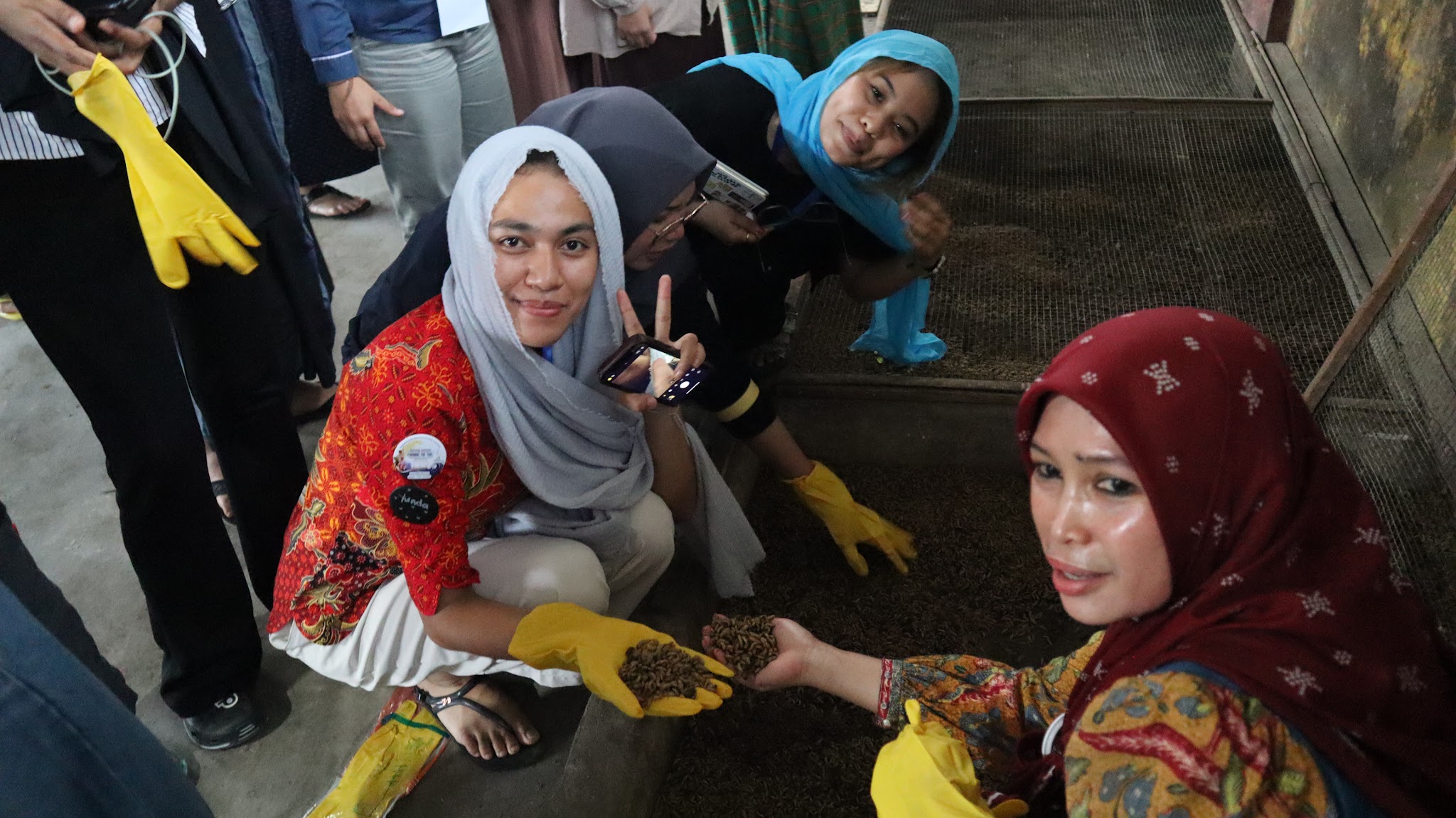 Foto: AMAN Indonesia
Pesantren life also integrates ecological ethics. Especially at KHAS Kempek, led by women ulama called Nyai Tho’ah Ja’far, waste management is practised as part of fiqh al-bi’ah—Islamic environmental jurisprudence. Santri separates organic, inorganic, and recyclable waste, turning organics into fertilizer and selling recyclables to support the pesantren’s economy. This practice embodies the maqasid al-shari’ah principle of hifzh al-bi’ah (preserving the environment), showing that pesantren life extends beyond spiritual learning to ecological stewardship.
Women’s Leadership in Pesantren
What struck me most during my immersion was meeting Nyai, a woman leader of the pesantren. Her presence challenged the assumption that leadership in Islamic institutions is reserved for men. Through her guidance, I saw how women are not only participants but also leaders in shaping Islamic education, democracy, and peacebuilding.
Nyai’s leadership embodies the principle that women’s voices carry authority, wisdom, and vision in Islamic contexts. She showed that pesantren life is not bound by patriarchal limits—it is a space where women’s leadership reshapes traditions and opens new possibilities for egalitarian Islamic thought.
This encounter resonated with the Mubadalah ethics I learned at the Centre for Islamic Law and Ethics of Mubadalah (CILEM) during the second day of immersion. Mubadalah emphasises reciprocity and partnership—that men and women are equal agents in realising Islamic values. It insists that leadership, scholarship, and authority are not gender-exclusive but shared responsibilities.
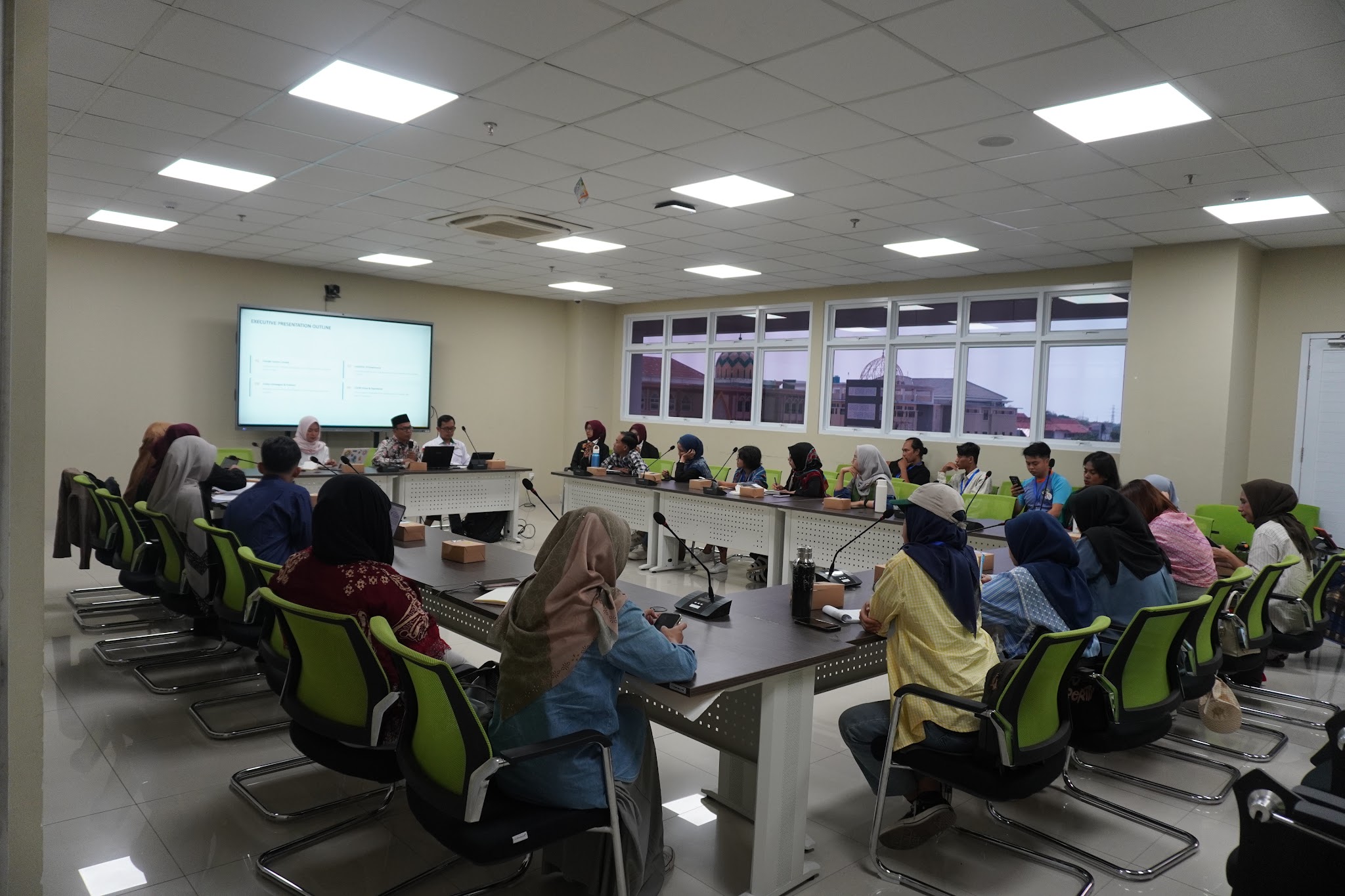 Foto: AMAN Indonesia
Nyai’s role reflects the broader KUPI (Kongres Ulama Perempuan Indonesia) movement, which has pioneered women’s voices in Islamic scholarship. KUPI ulama argue that women’s leadership is not only permissible but necessary to address contemporary challenges such as gender justice, environmental stewardship, and peacebuilding. Their declarations emphasise that women ulama are guardians of justice and dignity, and that their scholarship is essential for building a peaceful society.
By linking Nyai’s leadership to Mubadalah ethics and KUPI’s declarations, I see pesantren as evolving spaces where women’s leadership reshapes Islamic thought into a more egalitarian and globally relevant framework. In this light, pesantren become laboratories of democracy—where women’s voices are nurtured, where Mubadalah ethics are practised, and where Islam is lived as a religion of justice and peace.
Pluralism in Cirebon
My immersion at Keraton Kasepuhan Cirebon highlighted Indonesia’s plural heritage. Here, Islamic traditions coexist with traces of Hindu-Buddhist culture and local customs, symbolising the meeting of civilisations. This pluralism is not merely historical—it is alive in the pesantren, where openness to difference is woven into daily practice.
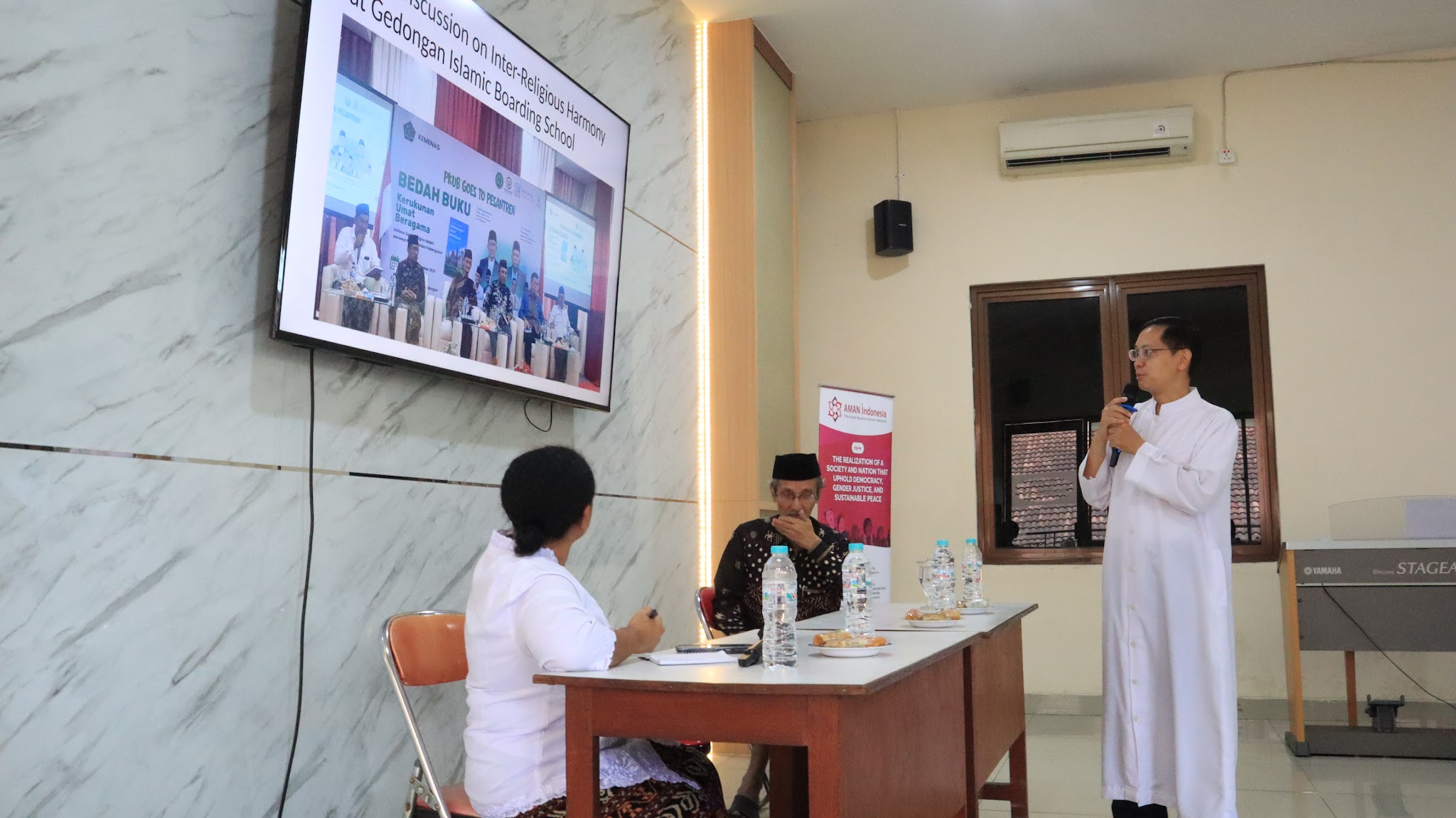 Foto: AMAN Indonesia
The dimension of interfaith harmony in Cirebon was further underscored during a session at the Gereja Bunda Maria on September 11. Buya Husein Muhammad—an Islamic scholar—recounted how Islam coexisted in a unique way by embracing pre-Islamic cultures, specifically Hindu and Buddhist, rather than rejecting them, a practice dating back to the era of the Wali Songo. Father Stefanus Ferriandis Harsono, a parish priest and fellow panellist, reminded us that the church was built 32 years ago because of the tolerance of the local Muslim community. He emphasised that “September 11 is no longer a time to dwell in regret, but a time to build reconciliation and peace.” The church also frequently engages in visits and joint activities with Muslims to build peace. This session included participants from Konghuchu and Christian communities, further illustrating Cirebon’s interfaith spirit.
Together, these voices underscored that Cirebon is not only a city of heritage but also a house of peace across faiths. The pesantren, the church, and the Keraton all stand as living testimonies to the possibility of coexistence. They show that pluralism is not an abstract principle but a lived reality, nurtured through tolerance, dialogue, and shared commitment to reconciliation.
Countering Islamophobia
The shadow of 9/11 has long cast Islam as synonymous with violence. Islamophobia spread across the world, fueling fear, discrimination, and resistance to Muslim communities. Yet my experience in Cirebon revealed a different reality: Islam as a religion of peace, pesantren as agents of dialogue, and Muslim youth and women as builders of solidarity.
Pesantren life itself is a counter-narrative. Through conversations with santri and leaders, I realised that pesantren are not isolated enclaves but bridges—connecting faith with society, tradition with modernity, and local life with global peacebuilding. It shows that Islam is not defined by extremism but by everyday acts of kindness, learning, and friendship. It demonstrates that peace is not abstract—it is lived, taught, and shared. Women leaders like Nyai further dismantle stereotypes, showing that Islam is not patriarchal or oppressive, but capable of nurturing egalitarian leadership.
Joint Peace Declaration
From my immersion in pesantren life, a constellation of values emerged that continue to shape my understanding of Islam as a faith of peace. I witnessed tolerance in the way diversity of faiths and cultures was respected, and dialogue in the choice to embrace conversation rather than confrontation. I experienced friendship through bonds built across differences, and solidarity in the collective stand against exclusion and violence. Meeting Nyai affirmed the importance of women’s leadership, showing that women are equal partners in shaping Islamic thought and democratic life. The pesantren’s ecological practices reflected responsibility for the environment, embodying fiqh al-bi’ah through waste management and stewardship of creation. Above all, I saw a deep commitment to peace, lived daily as acts of reconciliation in Nusantara and beyond. These values are not abstract ideals but practices embedded in pesantren life, shaping youth and women as leaders of peace in Asia.
As we commemorate 25 years since 9/11, we refuse to allow the memory of violence and hostility to define our future. We choose dialogue over division. Justice over exclusion. Dignity over discrimination. Friendship over fear. Solidarity over indifference. Peace over violence. We are not only calling for peace—we commit ourselves to becoming agents of peace.
References
- Pondok Pesantren Kebon Jambu Al-Islamy. Visi dan Misi.
- Pondok Pesantren Kebon Jambu Al-Islamy. Di Sudut Pondok Pesantren.
- Pondok Pesantren Kebon Jambu Al-Islamy. Pengelolaan Sampah sebagai Implementasi dari Fiqh al-Bi’ah.
- KUPI Declarations (2017, 2022).
- Gus Dur (Abdurrahman Wahid). Selected writings on pluralism and democracy.
- Ciremaitoday. Cirebon Rumah Perdamaian Lintas Iman Asia Pasca 9/11.